

On-Page SEO Checklist for a New Business Website
By Indra Chowdhury — Web Designer & SEO Consultant
Hey folks, Indra here. I’ve been designing websites and doing hands-on SEO for the last three years, and if there’s one question I get asked by almost every new business owner, it’s this: “Indra, my website looks great, why isn’t it ranking?” Nine times out of ten, the answer is the same — they skipped the on-page SEO checklist for a new business website before hitting publish. Design gets all the attention, but Google doesn’t rank a website because it “looks nice.” It ranks a website because it’s structured, optimized, and easy for both users and crawlers to understand.
I’ve watched Google roll out core update after core update — the Helpful Content updates, the Product Reviews updates, the spam updates — and one thing has stayed constant through every single one: sites with a solid on-page foundation survive, and sites without one get wiped out. So today, I’m walking you through the exact on-page SEO checklist for a new business website that I personally use with every client before their site goes live.
Why a New Business Website Needs On-Page SEO From Day One
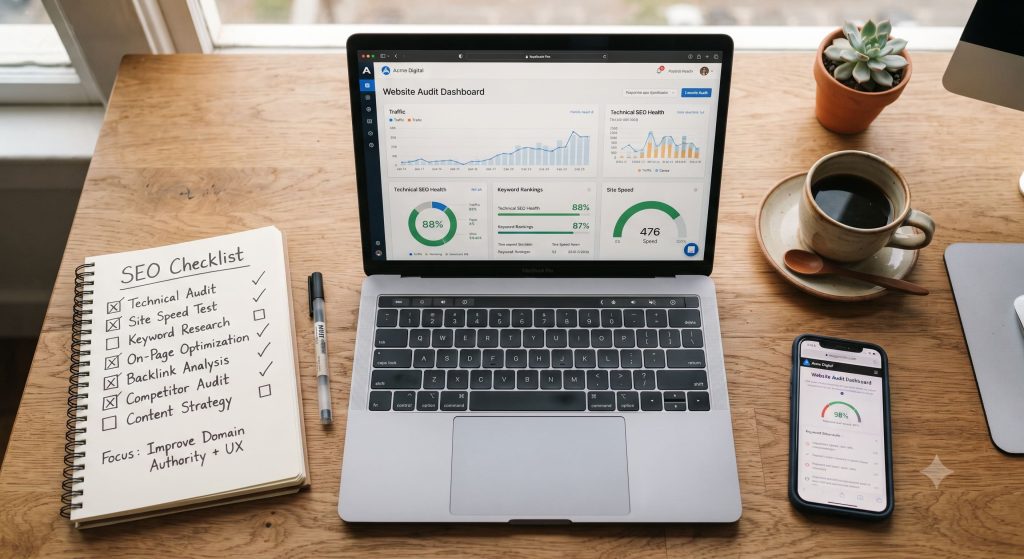
A lot of founders think SEO is something you “do later” once the business picks up. That’s a mistake I see constantly, and honestly, it costs businesses months of lost visibility. When you’re building a brand-new site, you have a golden window to set everything up correctly before Google even starts crawling it seriously. This is exactly why I always tell my clients: the on-page SEO checklist for a new business website isn’t a post-launch task — it’s a pre-launch requirement.
Think of it this way. Off-page SEO (backlinks, PR, social signals) takes time to build trust. But on-page SEO is 100% in your control from the very first day. If you nail your on-page SEO checklist for a new business website early, you’re not fighting an uphill battle six months down the line trying to fix broken title tags, duplicate content, or a site structure that confuses both users and search engines.
1. Keyword Research Before You Write a Single Page
Every proper on-page SEO checklist for a new business website starts with keyword research, not with content. I know it’s tempting to just start writing about your services, but you need to know what your actual customers are typing into Google first.
- Use tools like Google Keyword Planner, Ubersuggest, or Ahrefs to find search volume and intent.
- Focus on commercial and local intent keywords if you’re a service-based business.
- Separate keywords by funnel stage — informational, navigational, and transactional.
- Map one primary keyword and 2-3 secondary keywords per page.
This step alone determines the success of the rest of your on-page SEO checklist for a new business website, because every other item — titles, headers, URLs, content — depends on knowing which words your audience actually searches for.

2. Title Tags That Google and Humans Both Love
Your title tag is the single most important on-page element, period. It’s the first thing shown in search results, and it’s a direct ranking signal. When I run through an on-page SEO checklist for a new business website, title tags are where I spend real time — not just stuffing keywords, but writing something a human would actually want to click.
Rules I follow religiously:
- Keep it under 60 characters so it doesn’t get cut off.
- Place your primary keyword near the beginning.
- Make every title unique across the entire site.
- Add your brand name at the end for local and branded searches.
A weak title tag is the fastest way to sabotage an otherwise perfect on-page SEO checklist for a new business website, so don’t rush this part.
3. Meta Descriptions That Drive Clicks
Meta descriptions don’t directly boost rankings, but they heavily influence click-through rate, which absolutely does affect your long-term performance. Any complete on-page SEO checklist for a new business website needs a meta description strategy, not just an afterthought pulled automatically from page content.
- Write 150-160 characters of persuasive copy.
- Include your primary keyword naturally.
- Add a soft call-to-action like “Get a free quote” or “Book today.”
- Never duplicate meta descriptions across pages.
4. Header Tag Structure (H1, H2, H3)
I still find so many new business websites with either zero H1 tags or five of them on a single page. Proper header hierarchy is non-negotiable in any serious on-page SEO checklist for a new business website.
- One H1 per page, matching the page’s core topic.
- H2s for major sections, H3s for sub-points within those sections.
- Include your primary and secondary keywords naturally in at least a couple of headers.
- Never skip levels (don’t jump from H1 straight to H4).
Search engines use your header structure to understand content hierarchy, and users scan headers before deciding to read further — so this step of the on-page SEO checklist for a new business website serves both audiences at once.

5. URL Structure That’s Clean and Descriptive
Ugly URLs full of random numbers and parameters are a red flag for both users and search engines. Every on-page SEO checklist for a new business website I build includes strict URL rules from the very first page.
- Keep URLs short and readable.
- Use hyphens, not underscores, to separate words.
- Include your target keyword in the URL slug.
- Avoid stop words and unnecessary parameters.
For example, instead of yoursite.com/page?id=482, you want yoursite.com/on-page-seo-checklist. This small detail matters more than people realize.
6. High-Quality, Original Content
Here’s where I get a bit blunt with clients. No on-page SEO checklist for a new business website works if your content is thin, copied, or written purely for search engines instead of people. After watching Google’s Helpful Content updates roll out over and over, I can tell you with certainty: content quality is no longer optional, it’s survival.
- Write content that actually answers the searcher’s question completely.
- Aim for comprehensive coverage of the topic, not arbitrary word counts.
- Use natural language — don’t force keywords in awkwardly.
- Update older content regularly to keep it fresh and accurate.
This is genuinely the heart of any on-page SEO checklist for a new business website — everything else supports good content, it doesn’t replace it.
7. Keyword Placement and Density (Done Naturally)
Yes, keywords still matter, but the days of stuffing them everywhere are long gone. My rule of thumb when going through an on-page SEO checklist for a new business website is simple: if a keyword placement sounds unnatural when read aloud, remove it.
- Primary keyword in the first 100 words.
- Keyword variations and synonyms spread throughout.
- Primary keyword in at least one H2.
- Keep density reasonable — write for readability first, search engines second.

8. Image Optimization
New business websites are often loaded with beautiful, heavy, completely unoptimized images. Image SEO is a step that’s frequently missed in a typical on-page SEO checklist for a new business website, but it directly impacts both page speed and rankings.
- Compress every image before uploading (use WebP where possible).
- Write descriptive, keyword-relevant alt text for every image.
- Use descriptive file names instead of “IMG_1023.jpg.”
- Add captions where they add context.
Alt text also plays a role in accessibility, so this step of your on-page SEO checklist for a new business website genuinely serves multiple purposes at once.
9. Internal Linking Strategy
Internal links help Google understand your site’s structure and distribute ranking authority across pages. I always tell my clients that internal linking is the most underused part of any on-page SEO checklist for a new business website.
- Link from high-authority pages to newer, important pages.
- Use descriptive, keyword-rich anchor text (not “click here”).
- Ensure every important page is reachable within 3 clicks from the homepage.
- Create topic clusters linking related content together.

10. Mobile-Friendliness and Core Web Vitals
Since Google moved fully to mobile-first indexing, this step of the on-page SEO checklist for a new business website has become non-negotiable. If your site isn’t fast and responsive on mobile, none of your other optimization efforts will matter much.
- Test your site using Google’s Mobile-Friendly Test and PageSpeed Insights.
- Optimize Largest Contentful Paint (LCP), Interaction to Next Paint (INP), and Cumulative Layout Shift (CLS).
- Use responsive design, not a separate mobile site.
- Minimize render-blocking JavaScript and CSS.
Having survived multiple Google core updates that specifically targeted page experience signals, I can tell you this section of the on-page SEO checklist for a new business website deserves serious technical attention, not a quick glance.
11. Schema Markup for Rich Results
Structured data helps search engines understand exactly what your content represents, and it can earn you rich snippets in search results. This is one part of the on-page SEO checklist for a new business website that a lot of beginners skip entirely because it sounds technical — but it’s easier than people think.
- Add LocalBusiness schema for location-based businesses.
- Use Organization and Breadcrumb schema site-wide.
- Add FAQ schema on pages with question-and-answer content.
- Test everything with Google’s Rich Results Test tool.
12. Content Freshness and Regular Updates
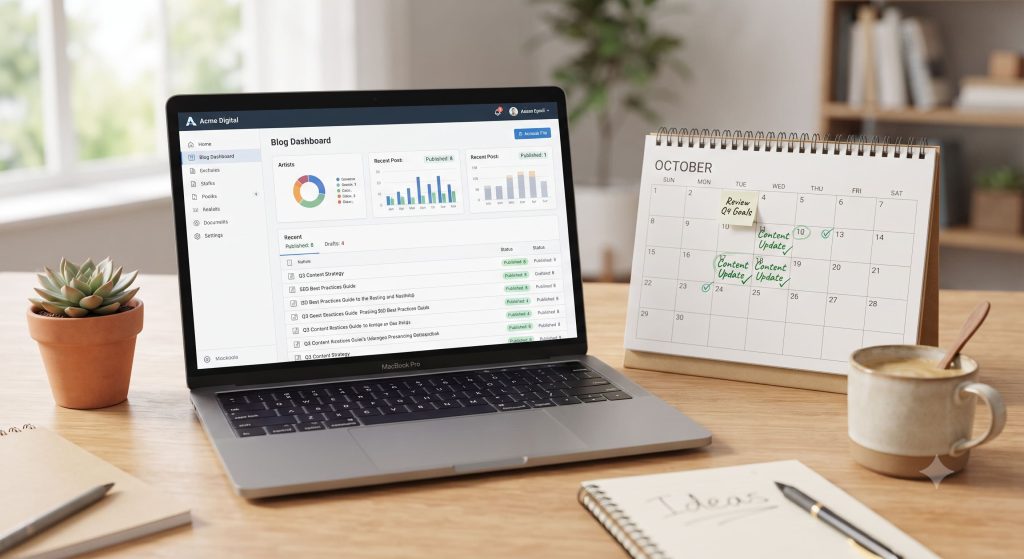
Google rewards websites that stay current. As someone who’s tracked ranking fluctuations through several algorithm shifts, I can confirm that content freshness is a recurring theme in nearly every core update. That’s why any long-term on-page SEO checklist for a new business website should include a maintenance schedule, not just a one-time setup.
- Revisit and update key pages every 3-6 months.
- Refresh statistics, examples, and outdated information.
- Add new sections to older content as your understanding grows.
- Remove or consolidate thin, outdated pages.
13. XML Sitemap and Robots.txt Setup
Technical basics still matter, and I’ve seen brand-new business websites launch without either of these files configured correctly. This step of the on-page SEO checklist for a new business website ensures search engines can actually find and crawl your pages properly.
- Generate and submit an XML sitemap through Google Search Console.
- Configure robots.txt to allow crawling of important pages.
- Block low-value pages like admin logins or duplicate filter URLs.
- Keep your sitemap updated as you add new pages.
14. HTTPS and Site Security
This is a quick one, but it’s non-negotiable. Google has confirmed HTTPS as a ranking signal, and users simply don’t trust sites without it anymore.
- Install an SSL certificate before launch.
- Redirect all HTTP traffic to HTTPS.
- Fix any mixed-content warnings.
- Keep your CMS and plugins updated to avoid security vulnerabilities.
15. User Experience (UX) Signals
Finally, no on-page SEO checklist for a new business website is complete without thinking about how real people experience your site. Google’s algorithms increasingly reward genuine user satisfaction signals — time on page, low bounce rates, and repeat visits.
- Keep navigation simple and intuitive.
- Use clear calls-to-action on every important page.
- Ensure readability with proper font size, spacing, and contrast.
- Test your site with real users before launch, not just yourself.

My Final Thoughts on the On-Page SEO Checklist for a New Business Website
After three years of building websites and living through Google’s constant core updates, here’s what I’ve learned: there’s no shortcut around the fundamentals. Every business owner wants instant rankings, but the truth is that a properly executed on-page SEO checklist for a new business website is what separates sites that grow steadily from sites that vanish after the next algorithm shift.
Run through every point in this on-page SEO checklist for a new business website before you launch, and revisit it every few months as your site grows. SEO isn’t a one-time task — it’s an ongoing relationship between your website, your users, and search engines. Get the on-page fundamentals right, and everything else you do — content marketing, link building, paid promotion — will work twice as hard for you.
If you’re launching a new business site this year, don’t treat this on-page SEO checklist for a new business website as optional reading. Treat it as your pre-launch bible. Trust me, your future rankings will thank you.
Indra Chowdhury is a web designer and SEO consultant who has spent the last three years helping new businesses build search-friendly websites from the ground up.